
AI agent development services
CML Team builds AI agents that work inside products and business processes. They read documents, act in your systems through tools and pass the decisions that matter to a person. In Persona, our own platform for IT agencies, agents parse resumes, match candidates and draft proposals. In Levee, they turn what computer vision sees into hotel inspection reports.
Results from our case studies
70%
Candidate screening speed
Persona case study40%
Operational efficiency of hotel teams
Levee case study
- Hourly or fixed price
- NDA signed
- Code rights pass to you after payment
Trusted by Industry Leaders
Powering innovation for leading companies worldwide
- See the case

- See the case

- See the case

- See the case








What we build
Agents inside business software
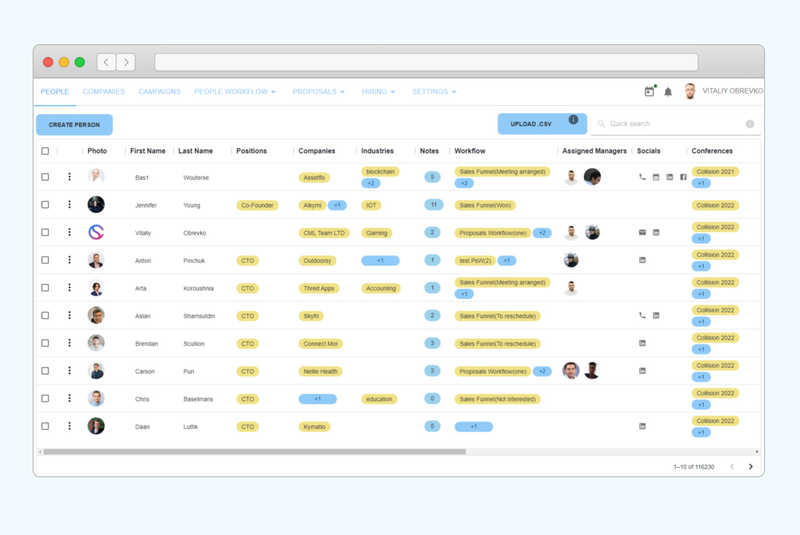
Agents that do the routine part of a team's work inside the platform it already uses. In Persona, our own business operating system for IT agencies, AI agents parse resumes and match candidates, analyze recorded interviews, validate and enrich company data, and draft emails and proposals.
See the Persona case studyAgents that turn what a model sees into a report
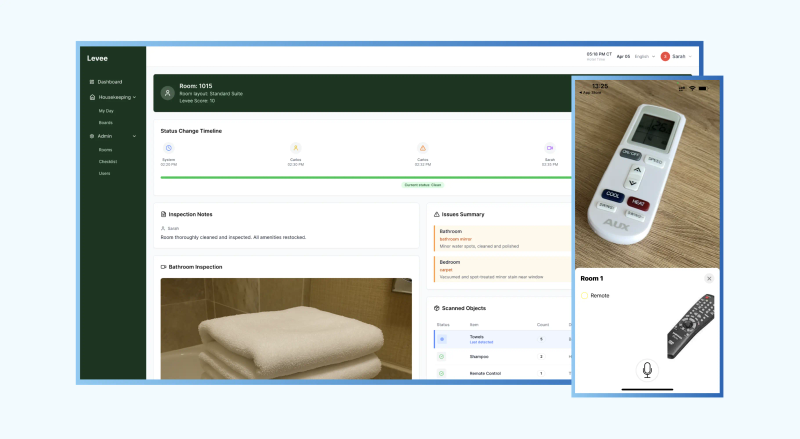
Computer vision or speech recognition captures the facts, and an agent turns them into a finished document. In Levee, agents turn the objects that computer vision recognizes during a hotel room inspection into the inspection report. Speech-to-text and translation cover 4 languages.
See the Levee case studyAgents connected to your systems
Agents that read and write in your CRM, email, database or internal tools through their APIs or through Model Context Protocol (MCP) servers, local or in the cloud. Each agent gets only the access its task needs.
Multi-agent workflows with human sign-off
A router hands each task to a specialized agent with a short list of tools. Steps that matter wait for a person's approval, and long jobs resume where they stopped instead of starting over.
Process automation with coding agents
Our engineers use Claude Code for development and testing, and we also use it to automate our clients' processes. We write agent skills for your process, and new skills can be generated from a plain-language description.
Tests for agents before and after launch
A golden set of real cases with the outcomes you expect, run after every change to the prompt, the tools or the model. A regression then shows up in a test run, not in a customer's inbox.
How it works
How an AI agent gets a task done
An AI agent is a language model that can act. It reads a task, decides on the next step and carries it out with tools, such as a search in your documents, a record in your CRM or a draft email. The model is the smallest part of the work. Most of it is deciding what the agent may do on its own, what it hands to a person and how you will know it did the job well. Plan an agent in seven steps.
- Trigger. An event, a schedule or a person starts the task, such as a new resume, a finished room inspection or an incoming email.
- Context. The agent gets what it needs to decide, from records in your systems and passages from your documents found through retrieval.
- Routing. A router passes the task to a specialized agent, so each agent has one job and a short list of tools.
- Tools. The agent acts through tools, the APIs of your systems or MCP servers, with only the permissions its job needs.
- Checks. Rules and limits check each result before it leaves the system.
- Human sign-off. Steps that message customers, spend money or change important records wait for a person.
- Logs and recovery. Every step is logged with its cost, and a long job resumes where it stopped.
Trigger and context. Start from one task that people already do by hand and can judge, not from an agent for a whole department. Collect real examples of that task with the result a good employee would produce. They show what context the agent needs, and they become its test set. In Persona the agents work on what the platform already holds, such as resumes, recorded interviews, company records and deals (Persona case study).
Routing and tools. An agent with one job and three tools is far easier to test than one agent with thirty. We build multi-agent systems where a router hands each task to a specialized agent. Tools connect an agent to your systems, such as the API of your CRM, your email or your database. A Model Context Protocol (MCP) server gives agents one standard way to reach your systems and data, locally or in the cloud. We work with LangGraph, LangChain and the Anthropic Agent SDK, and choose the model for each agent among Claude, GPT and Gemini by accuracy, speed and cost.
Checks and human sign-off. Decide before the build which actions an agent may take alone and which wait for a person. Reading, sorting and drafting can usually run alone. Sending, paying, deleting and anything a customer sees first should wait for a yes, at least until the test results show the agent gets them right. Put those limits in code, not only in the prompt, so a misleading input cannot talk the agent past them. In Levee, agents turn what computer vision recognizes during a room inspection into an automated report, and hotel teams gained over 40% efficiency on inspections and reporting, by our project records (Levee case study).
Tests before and after launch. The examples from the first step become a golden set, a fixed set of real cases with the outcomes you expect. Run it after every change to the prompt, the tools or the model, and compare each run with the last one. A regression then shows up in a test run, not in a customer's inbox. For open-ended results, such as a summary or a draft, a second model can score each one against the expected result.
Logs, cost and recovery. Log every step an agent takes, with its input, the tools it called and what each call cost. That log answers the question "why did it do that", shows where the money goes and lets a long job continue where it stopped instead of starting over. We trace agents with OpenTelemetry and LangSmith and track the cost of each request.
AI agents inside the product you already have
Most agents do not need a new product. They need a product whose data and backend can carry them, so check that first. For Arbor we added AI to a platform that was already running, with automated short clips from long videos (Arbor case study). For Levee the backend was unstable, so we rebuilt it from scratch before adding computer vision, speech-to-text across 4 languages and the agents that write inspection reports. The upgraded platform helped Levee secure its first B2B contract.
Coding agents for your team's own processes
Some processes do not need a new application at all. Our engineers use Claude Code for development and testing, and we also use it to automate our clients' processes. We write agent skills for the process, so the agent follows your steps, and new skills can be generated from a plain-language description. The rules are the same as for an agent inside a product. One task at a time, limited access, a log of every step, and a person approves what leaves the team.
How agents use your documents is on our RAG development page, and the wider service is AI and LLM integration. Our post on how we build AI systems that think, act and orchestrate shows more agent designs.
Do you need fixed rules, workflow automation or an AI agent?
Most processes need less AI than people expect. Start with the simplest option that does the job, and use an agent only for steps where the input varies and a judgment is needed. Persona combines configurable workflows with AI agents.
| Fixed rules | Workflow automation | AI agent | |
|---|---|---|---|
| Fits a task that | Follows the same if-then logic every time, such as routing a form by its fields or sending a reminder on a date. | Runs through known steps across several systems, such as from a signed deal to a new project and a hiring request. | Starts from messy input, such as a resume, a recorded interview or a photo, and needs a judgment before the next step. |
| Input it handles | Structured fields with known values. | Structured data and events from the systems it connects. | Text, documents, speech and images, in whatever form they come. |
| When the input is unexpected | It stops or takes the wrong branch, and someone adds a rule. | The step fails and waits for a person or a retry. | It may still act, so it needs limits in code, tests on a golden set and a person's sign-off on risky steps. |
| Cost to run | Close to nothing per run. | Low, mostly the platform or servers it runs on. | A model call on every step, so the cost grows with steps and volume. We track it per request. |
| How you check it | Test each rule once. | Test each path end to end. | Run a golden set of real cases after every change to the prompt, the tools or the model. |
| In our work | A smart queue that routes messages by subject-area rules for a US lending platform (Lender Admin Platform). | Configurable workflows in Persona that automate repetitive tasks. | Persona's agents for resumes, interviews and proposals, and Levee's inspection reports. |
Many products combine all three. Rules and workflows carry the routine, and an agent handles the steps that need a judgment.
Case studies
Client feedback
CML Team LTD has successfully delivered robust applications, provided continuous support during demos, and helped us secure our first B2B client. Moreover, the team is proactive, flexible, and detail-oriented. Their problem-solving approach and innovation have set them apart.

How we work on it
You write to us
Send a brief through the contact form or talk to our Delivery Manager on LinkedIn. Describe the process, the systems it touches and who does the work today.
- Owner
- You
- Result
- The process and its systems, described in your own words.
We choose one task to prove
We pick one task and collect real examples of it with the outcome you expect. They become the agent's golden set, and we agree which steps a person approves. You can start small, with consultations.
- Owner
- You and CML Team
- Result
- A golden set, the sign-off points and a first step you choose.
Free estimate and agreement
You get feedback on the idea and a free estimate. Billing is by the hour or, for a project, at a fixed price. An NDA is signed.
- Owner
- You and CML Team
- Result
- A signed agreement and a team at work.
Proof of concept on your cases
We build the agent for that one task and run it on the golden set. You see its results, what each run costs and which steps it passes to a person, and decide what comes next.
- Owner
- CML Team
- Result
- Results on your own cases, with the golden set scores and the cost per run.
Build with regular demos
Our project manager keeps you updated through regular meetings, planning sessions, demos and status reports. New tasks join the golden set as the agents take them on.
- Owner
- Our project manager
- Result
- Working agents you can try at each demo.
Launch and next steps
We deploy the agents with logs and cost tracking. Then we keep building with you, or your in-house team takes over. The rights to the code pass to you after payment.
- Owner
- You and CML Team
- Result
- Agents in production, with their code in your hands.
Ready to talk it through? Start with a message.
How you can work with us
Work with us as a dedicated team that joins your in-house developers, as a project we manage from requirements to launch, or with on-demand specialists.
Industries and related services
Industries
Related services
AI Transformation
See the serviceRAG development
Assistants and search that answer from your documents with citations to the source, as in Nestwise and Persona.
See the serviceCustom CRM development
Custom CRM development services for sales, delivery and hiring teams, on web, iOS and Android.
See the serviceMVP development
MVP development services for startups, from proof of concept to production, as we did for Swipelux, Levee and Health Influence.
See the service
Frequently asked questions
How long does it take to build an AI agent?
A proof of concept on one task comes first, and it shows the real scope before you commit to the full build. How long the rest takes depends on how many systems the agent works in, how many steps a person approves and how strict the tests must be. A free estimate gives you the answer for your own project.
How much does an AI agent cost to build and run?
Building it is billed by the hour or, for a project, at a fixed price, and the cost follows the scope. Running it means a model call on every step, so the bill grows with the number of steps, the volume of tasks and the model you choose. We track the cost of each request, so you see it from the proof of concept on. Before you decide, you get a free estimate.
Can you add AI agents to a product we already have?
Yes, if its data and backend can carry them, which is the first thing to check. For Arbor we added AI to an existing platform, with automated clips from long videos. For Levee the backend was unstable, so we rebuilt it before adding computer vision and the agents that write inspection reports. In Persona, AI agents work inside a platform for sales, delivery and hiring.
Do we need an AI agent or simple automation?
Use the simplest thing that does the job. Fixed rules and workflow automation cost less to run and are easier to test, so they fit steps with structured input and known paths. An agent fits steps that start from messy input, such as a resume, a recorded interview or a photo, and need a judgment. Most processes mix both, and the table above compares them.
Can an AI agent work inside our CRM, email or other systems?
Yes, through tools. An agent calls the API of your CRM, email or database, often through a Model Context Protocol (MCP) server that gives agents access to your systems and data, locally or in the cloud. Each agent gets only the access its task needs, agreed with you, and the actions that matter wait for a person's approval.
Which steps does a person approve?
The ones where a mistake is costly or visible. Reading, sorting and drafting can usually run on their own. Sending a message to a customer, paying, deleting or changing an important record should wait for a person, at least until the test results show the agent gets them right. We build those sign-off steps into the workflow itself, not only into the prompt.
How do you test an AI agent before it goes live?
With a golden dataset, a fixed set of real cases with the outcomes you expect. We run it after every change to the prompt, the tools or the model and compare each run with the last one, so a change that makes the agent worse shows up before users see it. For open-ended results such as drafts, we also use a second model as a judge.
Which models and frameworks do you use, and where does our data go?
We choose the model per task among Anthropic Claude, OpenAI GPT and Google Gemini, and build agents with LangGraph, LangChain or the Anthropic Agent SDK. We do not fine-tune models. We use self-hosted solutions or managed platforms such as Google Vertex AI, and the option, the AI vendor and the rules for your data are agreed with you before the work starts.
Who owns the code, and do you sign an NDA?
We sign an NDA, and the rights to the code pass to you after payment. After launch you choose whether we keep building with you or your in-house team takes the agents over and runs the golden set on its own, so every later change is still tested.
Related reading
Two ways to reach us
Whichever you choose, the conversation starts with a person.
Talk to our Delivery Manager
Oleksii Skurikhin, one of our Delivery Managers, is your first point of contact on LinkedIn. Tell him what you are working on.
Talk to our Delivery Manager on LinkedIn (opens in a new tab)Send us a brief
Describe the task in the contact form, or book a call with one of our founders on the same page. You can add a budget range to the form if you like.
Get a free estimate