
Trading software development
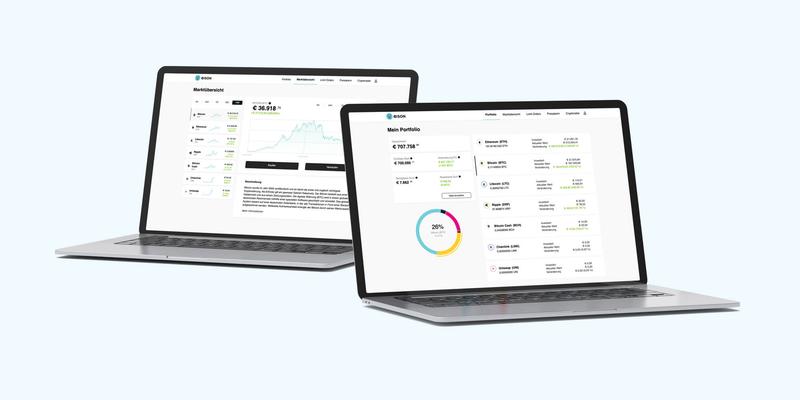
CML Team builds trading software for brokers, exchanges and crypto platforms, from trading apps and back offices to market data tools and trading bots. We built Trade Republic's back office, which went live in early 2019, and we developed and refined BISON, Börse Stuttgart's app for trading crypto, stocks and ETFs.
- Hourly or fixed price
- NDA signed
- Code rights pass to you after payment
Trusted by Industry Leaders
Powering innovation for leading companies worldwide
- See the case

- See the case

- See the case

- See the case

- See the case











What we build
Trading apps for stocks, ETFs and crypto
Trading screens for crypto, stocks and ETFs in a single platform, with trade-volume calculations, customizable price alerts, technical and sentiment-analysis indicators and automatic trading management.
See the Bison case studyBroker back offices
A full admin and back-office application, built server-side and client-side, with an integration layer that connects it to multiple backend systems through a broad variety of APIs.
See the Trade Republic case studyMarket data tools for traders
A CMS for Börse Stuttgart with components for charts, broker links, market data, company profiles and time and sales data, role-based access and integration with multiple exchanges.
See the Trading CMS case studyCrypto trading bots
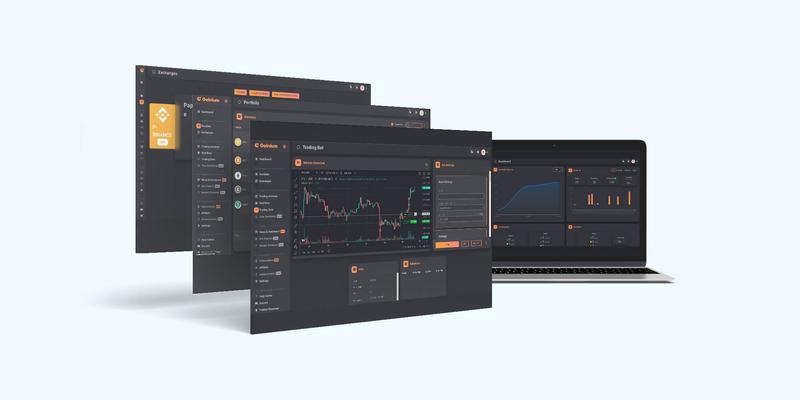
DCA bots, grid bots for exchanges including Binance and KuCoin, paper trading and take-profit and stop-loss with flexible settings. For FODL we improved the performance of its stop-loss, take-profit and anti-liquidation bots.
See the Gainium case studyExchange and swap services
A microservice that exchanges cryptocurrencies via Uniswap and 0x, built on an extended web3j library, for a widget that lets people buy crypto by card.
See the Swipelux case studyPortfolio and tax tools
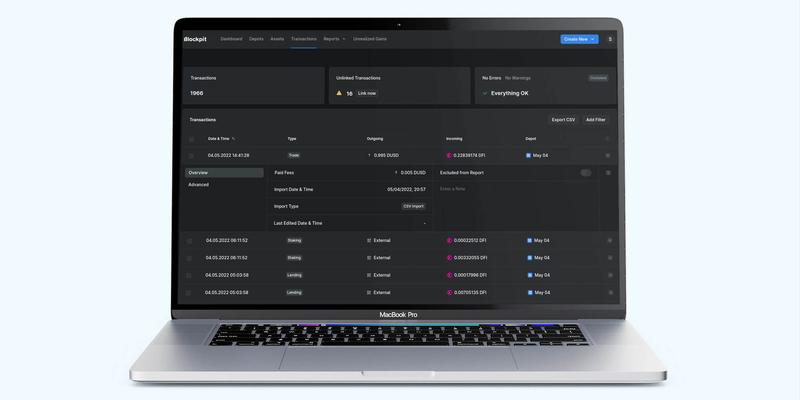
Aggregation of transaction data from exchanges such as Binance and Coinbase, wallet integrations such as Metamask and Ledger, portfolio management and tax reports by country.
See the Blockpit case study
How it works
How a trading platform fits together
A trading product is several systems that have to stay in step. They are the customer app, the trading services behind it, the connections to markets, the back office that staff work in and the reporting.
- Customer app. Onboarding with KYC, deposits, trading screens, alerts. BISON.
- Trading services. Orders and trade-volume calculations, risk rules such as stop-loss and take-profit, bots. BISON, Gainium, FODL.
- Market connections. Exchanges, brokers and on-chain protocols for prices and execution. Trading CMS, Gainium, Swipelux.
- Back office. Operations, admin views, control of business processes. Trade Republic.
- Reporting and tax. Portfolio views, profit tracking, tax reports. Gainium, Blockpit.
Customer app. Onboarding is the first thing a trader sees, so put KYC and deposits in the first scope. BISON combines a thorough KYC verification flow with deposits by credit card, Apple Pay and Google Pay, inside one app for crypto, stocks and ETFs. Our post on what KYC in crypto means and how verification works covers the basics.
Trading services. Put risk rules in the services that every order passes through. Gainium's bots run take-profit and stop-loss with flexible settings. For FODL we improved the performance of the stop-loss, take-profit and anti-liquidation bots and created an algorithm that optimizes payment execution through Flashbot.
Market connections. Treat each exchange or protocol connection as a component of its own, with its own tests, because it changes on someone else's schedule. Trading CMS integrates with multiple exchanges for trading data. Gainium runs bots on exchanges including Binance and KuCoin. Swipelux exchanges cryptocurrencies via Uniswap and 0x.
Back office. Staff need their own tools to run the business, and a back office connected to every backend system saves them from switching between screens. We built Trade Republic's back office, from which the bank controls its business processes centrally. It went live at the beginning of 2019, and we kept delivering new features in close coordination with the bank's other developers.
Speed as users grow. Code that served the first users can slow a platform down later. For Gainium we broke the code into microservices and refactored the existing codebase, and the faster platform with more capabilities let traders run their strategies efficiently.
Crypto exchange and trading app development
We build the parts of a crypto exchange product that traders and operators use every day, from the trading app with KYC and deposits to exchange services, trading bots and decentralized trading. For Börse Stuttgart, the second-largest stock exchange in Germany, we developed and refined BISON, its app for trading crypto, stocks and ETFs. For Gainium, a Singapore company, we built DCA bots, including multi-pair DCA bots, grid bots, a paper trading mode and profit-tracking charts, and moved the platform to microservices.
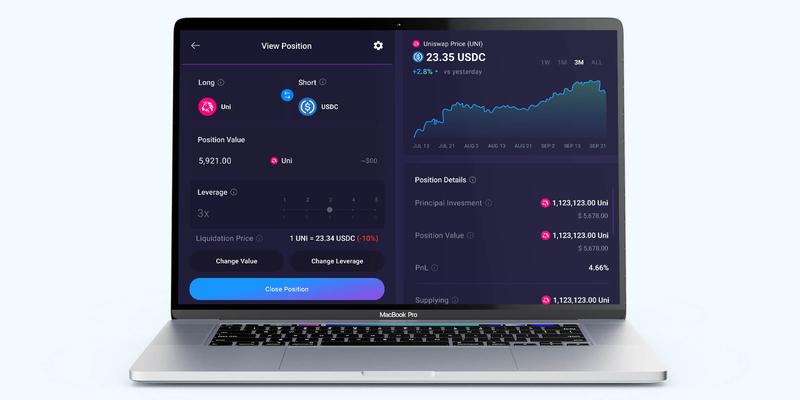
FODL is a decentralized leverage trading platform on Ethereum and Polygon. We developed new frontend components and exchange-rate charts, improved its bots and created the Flashbot payment algorithm, with ongoing frontend and smart contract development. For Swipelux we built the crypto exchange microservice behind its card payment widget, and it went into production.
More of this work, including smart contracts and token projects, is on our blockchain industry page.
Security tests, KYC and audits
A trading platform moves people's money, so a security claim should point to a test or an audit. BISON passed penetration tests, internal security tests and independent security audits. Its KYC verification flow was built for user security and regulatory compliance.
Plan these checks into the release schedule from the start. A penetration test that finds a problem a week before launch costs less than the same finding after the app is in the stores.
Case studies


Client feedback
Since CML Team LTD joined the project, the first version was successfully launched. They’re a dedicated and talented team, providing support for any client issue or inquiry. They also use the Scrum methodology for project management, keeping the client consistently informed about progress.

How we work on it
You write to us
Send a brief or message one of our Delivery Managers on LinkedIn. Say what the product trades, for whom, and what already exists.
- Owner
- You
- Result
- Your task reaches us in your own words.
We map the platform
We go through the parts with you, the customer app, trading services, market connections, back office and reporting, and agree which to build or change first.
- Owner
- CML Team
- Result
- A first scope and a recommended engagement model.
Estimate and agreement
An NDA is signed. For project work you get a free estimate; for a dedicated team you interview screened candidates. Billing is hourly or, for a project, a fixed price.
- Owner
- You and CML Team
- Result
- A signed agreement and a team at work.
Build with regular demos
In project work our project manager keeps you updated through regular meetings, planning sessions, demos and status reports. In a dedicated team our engineers report to your tech lead.
- Owner
- Our project manager, or your tech lead in a dedicated team
- Result
- Working features you can try at each demo.
Launch and new features
After launch we keep adding features with your team, as we did for Trade Republic and Trading CMS. The rights to the code pass to you after payment.
- Owner
- You and CML Team
- Result
- A live platform and a team that knows it.
Ready to talk it through? Start with a message.
How you can work with us
Work with us as a dedicated team that joins your in-house developers, as a project we manage from requirements to launch, or with on-demand specialists.
Industries and related services
Industries
Related services
Frequently asked questions
Can you build a stock and crypto trading app?
Yes. For Börse Stuttgart we developed and refined BISON, which combines crypto, stock and ETF trading in a single platform. It has trade-volume calculations, price alerts, technical and sentiment indicators, a KYC flow and deposits by card, Apple Pay and Google Pay.
Can you build back-office software for a broker?
Yes. We built the back office of Trade Republic, a German mobile broker bank, server-side and client-side, connected to the bank's backend systems through APIs. It went live at the beginning of 2019 and became an underpinning system for the bank's brokerage services.
Can you connect our platform to exchanges?
Yes. Gainium runs trading and grid bots on exchanges including Binance and KuCoin. Trading CMS integrates with multiple exchanges for trading data. Blockpit aggregates transaction data from exchanges such as Binance and Coinbase, and Swipelux exchanges cryptocurrencies via Uniswap and 0x.
Do you build crypto trading bots?
Yes. For Gainium we built DCA bots, including multi-pair ones, grid bots, paper trading and take-profit and stop-loss with flexible settings. For FODL, a decentralized leverage trading platform, we improved the stop-loss, take-profit and anti-liquidation bots.
How do you handle security and KYC?
A security claim should rest on tests and audits. BISON, which we developed and refined in a joint effort, passed penetration tests, internal security tests and independent security audits. Its KYC verification flow was built for user security and regulatory compliance.
Can you speed up our existing trading platform?
Yes. For Gainium we broke the code into microservices and refactored the existing codebase to improve operation speed. For FODL we improved the performance of its bots and optimized payment execution through Flashbot.
Can your engineers join our trading team?
Yes. Our developers joined the team of Blockpit, a crypto tax startup, in 2018. At Trade Republic we kept delivering new features in close coordination with the bank's other developers.
How do you bill, and who owns the code?
We work by the hour or, on a project, for a fixed price. We sign an NDA, and the rights to the code pass to you after payment.
Related reading


Two ways to reach us
Whichever you choose, the conversation starts with a person.
Talk to our Delivery Manager
Oleksii Skurikhin, one of our Delivery Managers, is your first point of contact. Tell him what you are working on.
Talk to our Delivery Manager on LinkedIn (opens in a new tab)Send us a brief
Describe the task in the contact form. You can add a budget range if you like.
Get a free estimate