
Payment software development
CML Team builds payment software for fintech companies and startups, from payment gateways and money transfer backends to card and wallet checkout and POS apps. For a Lithuanian financial services provider we built a single-window payment gateway linked to local payment systems worldwide. For Swipelux we built the exchange microservice behind its crypto-by-card widget, and it went into production.
- Hourly or fixed price
- NDA signed
- Code rights pass to you after payment
Trusted by Industry Leaders
Powering innovation for leading companies worldwide
- See the case

- See the case

- See the case

- See the case








What we build
Payment gateways linked to local payment systems
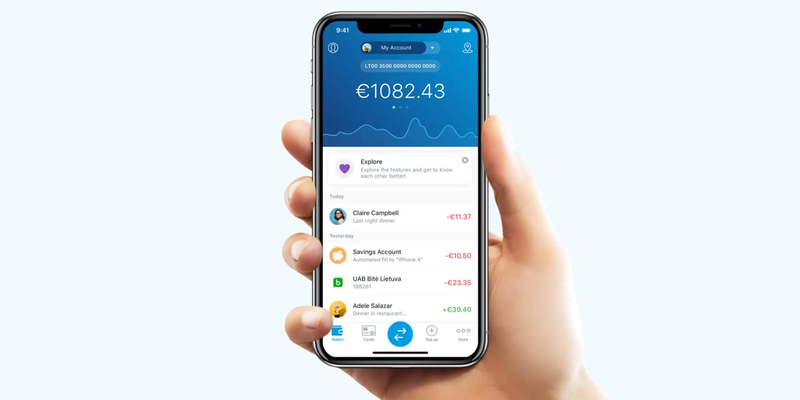
A single-window gateway that brings several payment rails into one interface, with an integration layer to local payment and banking systems in other countries. We built one for a Lithuanian financial services provider, with bank-system integration for better transaction reporting.
See the Payment System case studyMoney transfer and multi-currency backends
Backends for cash pickup transfers, euro transfers outside the EEA and international transfers in different currencies, with secure data transfer protocols. The new payment corridors took our Lithuanian client into new countries and customer segments.
See the Payment System case studyCard and wallet payments inside apps
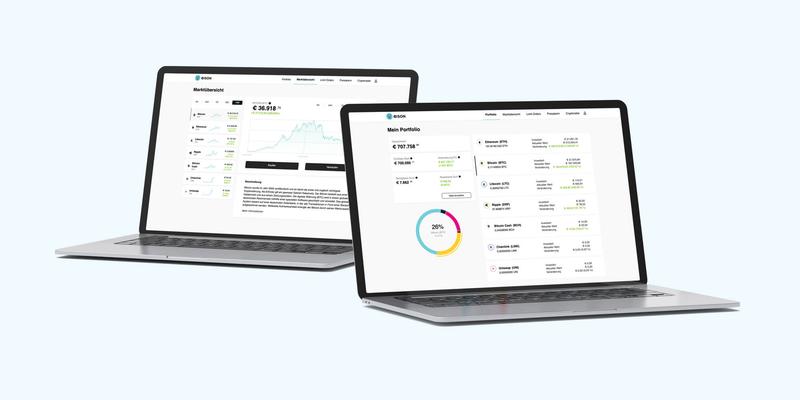
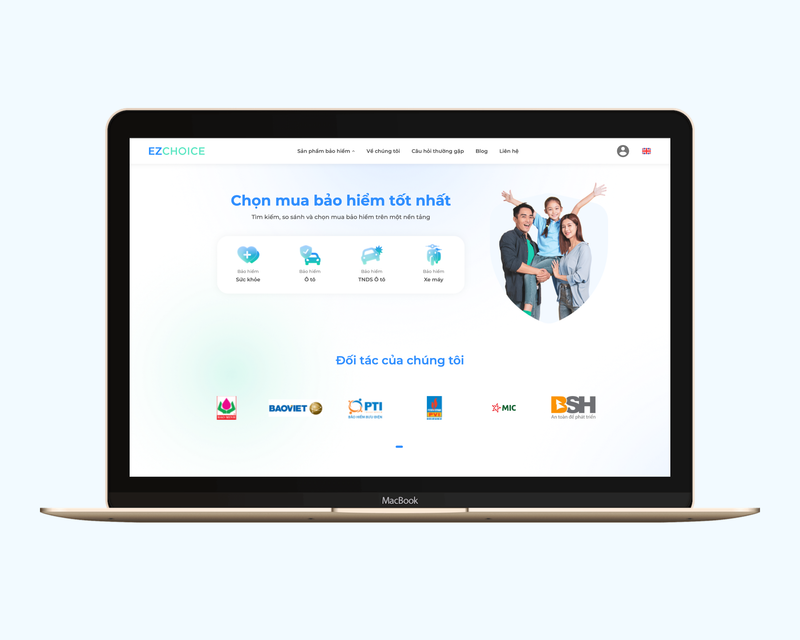
Deposits and checkout by card, Apple Pay, Google Pay and e-wallets, next to the identity checks they need. BISON takes deposits by credit card, Apple Pay and Google Pay after a thorough KYC flow. EZChoice takes payments through popular e-wallets, including the Vietnamese MOMO.
See the Bison case studyPOS and in-store payment apps
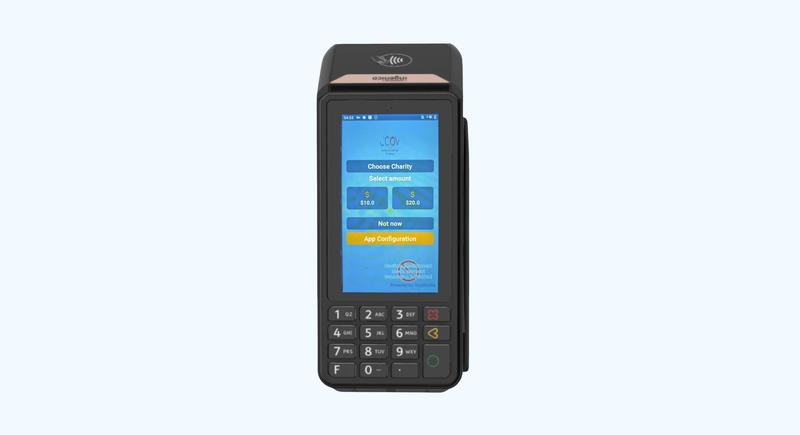
Apps for payment terminals that add a step to the transaction itself. GoodZilla lets shoppers donate to charity at checkout on Ingenico Axium devices, with payment processing through Stripe and an admin panel where merchants set up the donation flow.
See the GoodZilla case studyCard-to-crypto payment services
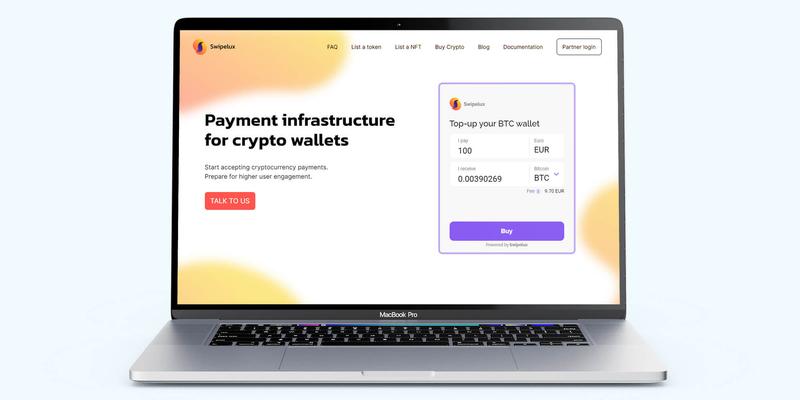
Services behind a widget that lets people buy cryptocurrency with a card. For Swipelux we built the microservice that exchanges cryptocurrencies via Uniswap and 0x. A proof of concept came within weeks, then we hardened it for production over the following month.
See the Swipelux case studyReconciliation between your records and real transfers
Services that match what your system recorded with what actually moved. For Blocksport we built a payment microservice that reconciles blockchain records with real financial transfers through a queue broker and a database synchronizer.
See the BlockSport case study
How it works
How a payment moves through your product
Payment software is mostly about what happens around the provider's API, such as the records, the confirmations, the matching with the bank and every way a payment can fail halfway. Plan the flow in seven steps before you choose a provider.
- Checkout. The customer pays on a hosted page, in embedded card fields, with a wallet such as Apple Pay or Google Pay, or on a POS terminal.
- Your record. Your backend saves the payment with its own ID before it calls the provider.
- Authorization. The provider or gateway asks the card network, the bank or the local payment system to approve the payment.
- Confirmation. The provider reports the result, often through a webhook, and your system updates the order.
- Settlement and payouts. The money reaches your account, or your sellers, on the provider's schedule.
- Reconciliation. Your records are matched with the provider's and the bank's reports.
- Refunds and disputes. Refunds, chargebacks and failed payouts go back through the same records.
Hosted payment page, iframe or direct API
A hosted payment page sends the customer to the provider's page to pay and then back to you. Embedded fields, usually iframes, show the provider's card fields inside your own checkout. With a direct API, your servers receive the card number and pass it on. The first two keep card numbers off your servers, so a much smaller part of your system falls under PCI DSS, the card industry's security standard. A direct API gives you full control of the checkout and brings your servers into that scope. Most providers also offer Apple Pay and Google Pay on their hosted pages and in their embedded fields. BISON, the trading app we developed and refined for Börse Stuttgart, takes deposits by credit card, Apple Pay and Google Pay (BISON case study).
Card data and PCI DSS
PCI DSS applies to every system that stores, processes or transmits card data, and to the systems that can affect their security. Compliance is assessed for your business, and the kind of assessment depends on how many card payments you take and how you take them. We design the product so that as little of it as possible touches card data, keep the parts that do separate from the rest, and describe the payment flow for your assessment. Plan this before the first line of checkout code, because moving card handling later means rebuilding the checkout.
Records, retries and webhooks
Networks fail at the worst moment, so a payment flow has to survive a request sent twice or a confirmation that never comes. Give every payment your own ID before you call the provider, and send it as the idempotency key where the provider supports one, so a retried request does not charge the customer twice. Treat the provider's webhooks as the source of truth for the result. Check their signatures, expect them late, twice or out of order, and make handling them safe to repeat. Keep each amount with its currency code and in the smallest unit, such as cents, so rounding never changes a total. For a US loan origination platform we built logic that keeps every operation on a user's loan consistent despite concurrent and asynchronous processing (Lender Admin Platform case study).
Reconciliation
Your records, the provider's report and the bank statement should tell the same story every day. When they do not, you want to find out from a report, not from a customer. For Blocksport we built a payment microservice that reconciles blockchain records with real financial transfers through a queue broker and a database synchronizer (Blocksport case study).
Several providers and local payment systems
One provider rarely covers every country, currency and payment method. When you need more, put a layer between your product and the providers, so a new provider or country becomes one more connection instead of a change to every screen. For a Lithuanian financial services provider we built the backend for cash pickup transfers, euro transfers outside the EEA and international transfers in different currencies. We connected it to local payment and banking systems in other countries and built a single-window payment gateway that brings several payment rails into one interface. The new payment corridors took the client into new countries and customer segments (Payment System case study).
KYC, strong authentication and security tests
If your product holds money for users or lets them trade, identity checks come before the first deposit. We built the KYC verification flow of BISON, and for Blocksport a KYC flow tied to staking. Our post on what KYC in crypto means covers the basics. In the EEA and the UK most card payments also need strong customer authentication, which card payments handle with 3-D Secure, so leave room for that step in the checkout. Plan penetration tests and security audits into the release schedule as well. BISON passed penetration tests, internal security tests and independent security audits.
Subscriptions and usage-based billing
Not every product takes one-off payments. For RSI.Live, a conference platform we built for TRANSLIT, we built automated usage-based billing and instant credit management with a Stripe integration (RSI.Live case study).
More fintech work, from broker back offices to lending and insurance, is on our fintech software development page, and trading apps are on trading software development.
One payment provider, several providers or your own gateway?
Most products start with one payment provider and its ready checkout. More providers or your own gateway pay off when you need countries, payment methods or routing that one provider does not cover.
| One payment provider | Several providers behind one layer | Your own gateway | |
|---|---|---|---|
| Fits when | You sell in a few markets, and the provider covers your payment methods. | You need more countries or methods, or a fallback when one provider is down. | Payments are your product, or you connect to banks and local payment systems directly. |
| Card data on your servers | Can stay off them with the provider's hosted page or embedded fields. | Can stay off them if every provider's fields or tokens are used. | Often passes through your systems, which brings more of them into PCI DSS scope. |
| Work to the first live payment | The least. The provider's SDK and test mode do most of it. | More. A routing layer, one integration per provider and reconciliation across them. | The most. You build what providers give ready, plus a connection to each payment system. |
| What you maintain | Your checkout, webhooks and payment records. | The routing layer, every integration and one view of all payments. | The whole payment flow, its security tests and every outside connection. |
| Dependence on one company | High. Its rules, fees and outages become yours. | Lower. Traffic can move to another provider. | Lowest, but the work and the responsibility move to you. |
Whether your business needs a payment licence is a question for your legal advisers. We build the software and its integrations.
Case studies

Client feedback
CML Team supported us with backend and blockchain development. They have quite a diverse expertise in technologies such as Java, Spring, and web3j and profound knowledge of the crypto industry. In a matter of weeks, CML Team was able to build a POC microservice and then polish it to perfection over the next month. This key microservice is already in production, allowing us to scale even faster and win new markets.

How we work on it
You write to us
Send a brief through the contact form or talk to our Delivery Manager on LinkedIn. Say what money moves, from whom to whom, in which countries and currencies, and which providers you use today.
- Owner
- You
- Result
- Your payment flow, described in your own words.
We map the payment flow
We go through checkout, providers, records, webhooks, reconciliation, payouts and reports with you, mark the parts that touch card data and agree what to build or change first.
- Owner
- You and CML Team
- Result
- A first scope and a recommended engagement model.
Estimate and agreement
An NDA is signed. For project work you get feedback on the idea and a free estimate; for a dedicated team you interview screened candidates. Billing is hourly or, for a project, a fixed price.
- Owner
- You and CML Team
- Result
- A signed agreement and a team at work.
Build on the providers' test environments
We build each flow on the providers' test environments and show it at regular demos, including declined payments, refunds and repeated webhooks. Our project manager keeps you updated with meetings and status reports.
- Owner
- Our project manager
- Result
- Payment flows you can try at each demo.
Security checks and launch
Penetration tests and security audits go into the release schedule, and the payment flow is described for your assessment. Then the first live payments go through.
- Owner
- You and CML Team
- Result
- A live payment flow, checked before real money moves.
New providers and countries
After launch we add providers, countries and payment methods with you, or your in-house team takes over. The rights to the code pass to you after payment.
- Owner
- You and CML Team
- Result
- A payment system that grows with your markets, with its code in your hands.
Ready to talk it through? Start with a message.
How you can work with us
Work with us as a dedicated team that joins your in-house developers, as a project we manage from requirements to launch, or with on-demand specialists.
Industries and related services
Industries
Related services
Software Development
See the serviceTrading software development
Trading software development for brokers, exchanges and crypto platforms, including the Trade Republic back office and Börse Stuttgart's BISON app.
See the serviceMVP development
MVP development services for startups, from proof of concept to production, as we did for Swipelux, Levee and Health Influence.
See the service
Frequently asked questions
How long does it take to build payment software?
It depends on the scope, and these are examples, not a promise. For Swipelux, a proof of concept of the exchange microservice behind its card payment widget came within weeks, and we hardened it for production over the following month. A first payment through one provider's ready checkout takes far less work than a gateway connected to several payment systems. For project work you get a free estimate before you decide.
How much does payment software development cost?
We work by the hour or for a fixed price, and either way the cost follows the scope. It grows with the number of providers, countries and currencies, with card data on your own servers, and with KYC, payouts, refunds and the reports you need for reconciliation. Before you decide, you get feedback on your idea and a free estimate. You can also start small, with consultations.
Can you integrate a payment gateway into our existing product?
Yes. GoodZilla, a POS app for charity donations at checkout, takes payments through a Stripe integration on Ingenico Axium terminals. BISON takes deposits by credit card, Apple Pay and Google Pay, and EZChoice takes payments through popular e-wallets, including the Vietnamese MOMO. We start by mapping where the payment fits into your current flow and your records.
Can you build our own payment gateway?
Yes, when your product needs one. For a Lithuanian financial services provider we built a single-window payment gateway that brings several payment rails into one interface and connects to local payment and banking systems in other countries. If one provider covers your markets, its ready checkout is usually the faster start, and the table above shows when each option fits.
Do you handle PCI DSS compliance?
PCI DSS applies to your product, and compliance is assessed for your business. Our part is to design the payment flow so that card numbers stay with the payment provider wherever possible, through a hosted page or embedded fields, and to keep the parts that do touch card data separate. That keeps less of your system in scope. We describe the flow for your assessor and your advisers.
Can you add KYC checks to sign-up?
Yes. We built the KYC verification flow of the BISON trading app, and a KYC flow tied to staking for Blocksport, with email notifications for verified users. Where the check sits in sign-up, which provider runs it and what happens when a check fails are decided before the build, so users are not lost at that step.
Can you connect to local payment systems and banks in other countries?
Yes. For a Lithuanian financial services provider we connected the payment platform to national payment and banking systems, for cash pickup transfers, euro transfers outside the EEA and international transfers in different currencies. We also built a bank-system integration for better transaction reporting. The new payment corridors took the client into new countries and customer segments.
Do you build crypto payment features?
Yes. Swipelux offers a widget that lets people buy cryptocurrency with a credit or debit card. We built the microservice behind it that exchanges cryptocurrencies via Uniswap and 0x, extending the web3j library to build it quickly, and it went into production. For Blocksport we built a payment microservice that matches blockchain records with real financial transfers.
Who owns the code, and do you sign an NDA?
We sign an NDA, and the rights to the code pass to you after payment. Client names stay private when the client wants that. Our Lithuanian payment client is under NDA, so its case page names only the country and describes the work without the company name.
Related reading

Two ways to reach us
Whichever you choose, the conversation starts with a person.
Talk to our Delivery Manager
Oleksii Skurikhin, one of our Delivery Managers, is your first point of contact on LinkedIn. Tell him what you are working on.
Talk to our Delivery Manager on LinkedIn (opens in a new tab)Send us a brief
Describe the task in the contact form, or book a call with one of our founders on the same page. You can add a budget range to the form if you like.
Get a free estimate